
Historical Evolution of Reel-to-Reel Recorders
Reel-to-reel recorders were at the center of the sound revolution in the 1960s. Their journey began with magnetic tape tech from World War II, first developed by the Germans as the Magnetophon. Americans quickly adopted and improved this technology.
Bing Crosby saw reel-to-reel's potential to transform the studio experience with sharper editing, improved sound quality, and stereo recording. The shift from mono to stereo in the '50s and '60s made music feel more immersive.
As tape tracks multiplied, these machines could handle multiple tracks, allowing separate recording of instruments and vocals. This gave musicians and producers unprecedented freedom to experiment.
The Ampex AG350 brought reliable solid-state recording to the scene in the early 1960s. Teac offered various models with different reel sizes for both casual listeners and audiophiles. Revox's D36 championed stereo recording, while their later B77 became known for its durability and quality.
Reel-to-reel's crisp highs and full-bodied lows made music come alive. Some audio engineers still prefer these machines, claiming digital can't match their warm sound.
These recorders also found a place in homes, with families capturing voices and sounds on consumer models like Akai and Sony decks. Tascam's sturdier decks, like the 3440 with its simul-sync feature, changed the game for budding musicians by allowing overdubbing.
Reel-to-reel set the stage for a monumental era in music and audio production, leaving a lasting impact on the industry.
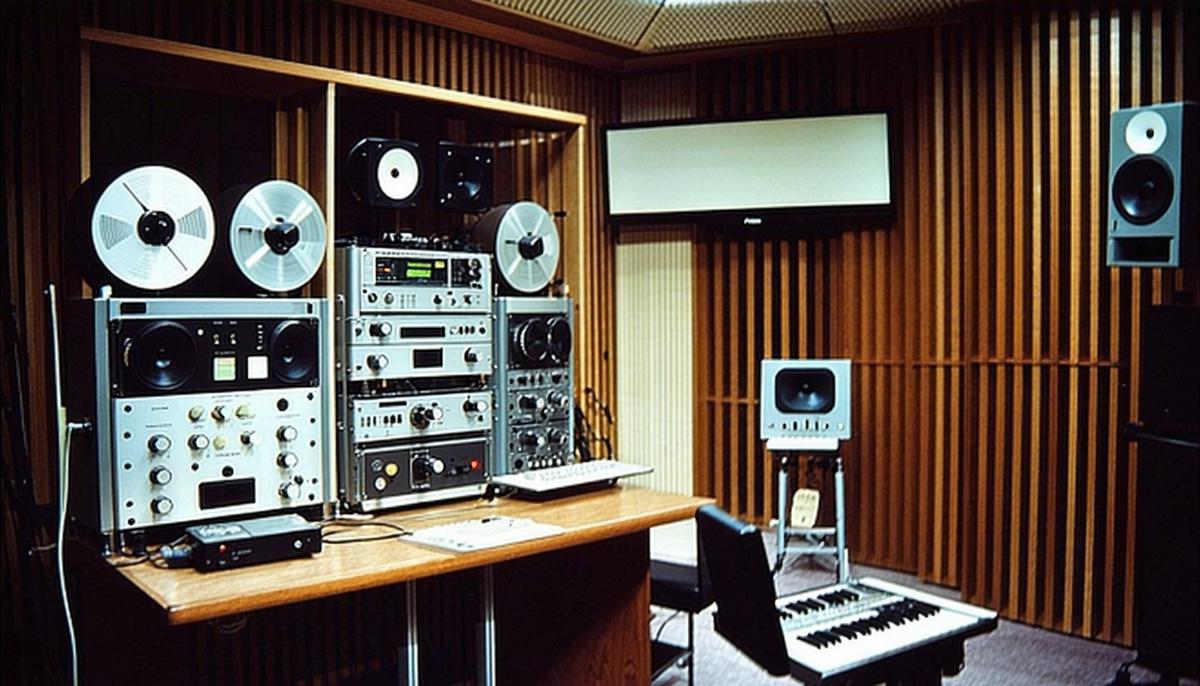
Iconic Models and Their Features
The Tascam 3440 brought complexity and innovation without breaking the bank. Its simul-sync feature allowed musicians to overdub seamlessly, laying down tracks one after another. Built solidly, it became the heartbeat of many home studios.
The Revox B77 strutted its stuff with Swiss precision and style. Compact yet robust, it rivaled larger, more expensive machines. Its reliability and sound fidelity made it a top choice for audiophiles seeking perfection.
The Ampex AG350 was the workhorse of the bunch, all about dependability and heavy-duty use. Its rock-solid construction and simple, solid-state design made it a studio standard. This wasn't just a recorder; it was a partner in musical magic-making, capable of handling rigorous sessions with grace.
These machines were enablers of creative genius, turning bedrooms into sound studios and studios into hit factories. Each had its charm, offering unique features that made them the darlings of the decade. Even in the digital age, the warmth and character of these iconic reel-to-reel machines continue to be cherished.
The Transition to Digital and Its Impact
As the 60s wound down, the music scene faced a digital revolution. Digital recording brought features that seemed futuristic at the time. Gone were the quirks of tape hiss and scratchy interruptions. Instead, digital ushered in pristine, crystal-clear sound quality.
Audio engineers found themselves with endless possibilities. Digital editing was like moving from a typewriter to a high-speed computer. But the switch wasn't all rosy for every artist. Some missed the charming analog warmth and magical fuzzy edges of reel-to-reel.
Digital tech redefined portability and accessibility. Recording sessions that once needed hefty machines could now be done on a sleek laptop. This led to a blossoming of home studios, making music creation more accessible to the masses.
While digital took the spotlight, reel-to-reel found a niche with audiophiles who craved its unique timbre. Modern musicians sometimes still reach for that analog glow, infusing their tracks with a character that feels just right.
Reel-to-reel recorders laid the groundwork for a musical revolution that continues today. They taught us the language of sound, and while digital now dominates, the essence of those analog pioneers remains, echoing in the waves of digital progress.

Reel-to-Reel in Modern Times
Reel-to-reel recorders are still grooving their way into the hearts of audiophiles and sound purists. These machines produce a warm, rich, analog charm that even sophisticated digital processes find hard to match. It's like comparing freshly baked bread with store-bought sliced white.
The nostalgia factor is strong. Audio enthusiasts enjoy the tactile engagement of threading tape and adjusting reels. It's a chance to connect with a time when music creation was as much about craftsmanship as performance.
Companies like Revox continue to manufacture these marvels. The Revox B77 MK III is a modern masterpiece, built with precision and updates that enhance reliability and sound performance. It's a blend of innovation and tradition, accommodating the demands of today's audio aficionados.
Key Features of the Revox B77 MK III:
- Three-motor drive with direct-drive and servo control
- Digital counter with time and counter modes
- Ability to play various ¼-inch 2-track tapes
- Balanced XLR ins/outs and cinch connections
- Precisely calibrated VU meters with LED overload indicator
A community of enthusiasts is committed to preserving this analog art form. There's a resurgence in the production of new tapes and refurbishing of classic models, inviting newcomers to join the reel revolution.
Reel-to-reel recorders represent more than just technology; they embody an ethos of sound that transcends digital precision. They capture a spirit of times past, when attention to detail was key and the richness of sound was about the journey as much as the destination.
As the digital age marches on, the charm of reel-to-reel recorders remains a testament to the enduring appeal of analog sound. These machines continue to resonate with those who appreciate their warmth and depth, serving as a bridge between past and present. The journey of reel-to-reel technology is a reminder that while innovation shapes the future, the echoes of history enrich our experience.
- Schmidt Horning S. Chasing Sound: Technology, Culture, and the Art of Studio Recording from Edison to the LP. Johns Hopkins University Press; 2013.
- Miller D. Fresh Air: The Impact of Tape on Public Radio Production. National Public Radio Archives; 2007.
- Anderson J. The Evolution of Audio Recording: From Analog to Digital. Journal of Audio Engineering. 2015;63(5):300-315.
- Revox AG. B77 MK III Technical Specifications. Revox Professional Audio Equipment Catalog. 2024.